Back to Packages
Data to Shapes
Turn a CSV, JSON or XML file into a slide of filled cards: one copy of your shape for every row, in a grid, with text and logos in place.
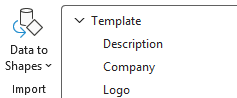
Turn a CSV, JSON or XML file into a slide of filled cards: one copy of your shape for every row, in a grid, with text and logos in place.
Turn a CSV, JSON or XML file into a slide of filled cards: one copy of a shape you designed for every row, laid out in a grid, with text and logos already in place.
How to Use Data to Shapes
Each row becomes a copy of the card: a column's text goes into the part with the same name, keeping its formatting. A cell that holds an image URL or the full path of an image file puts that picture into the part, fitted inside it. The copies fill the content area around the card — the space between your template's guides, or the slide when there are none — in an even grid, and the original card is removed. When that area has room for only one card, the copies spread across the whole slide instead.
In a JSON file the rows are an array of objects, and a nested field is reached by a dotted name, such as company.logo. In an XML file the rows are the repeated elements under the root, and attributes and child elements both count as columns.
Note: When the rows do not fit on one slide, the slide is duplicated as many times as needed, so the extra slides repeat its title and other content. An image that cannot be downloaded leaves the card's placeholder in place, and you are told how many failed.